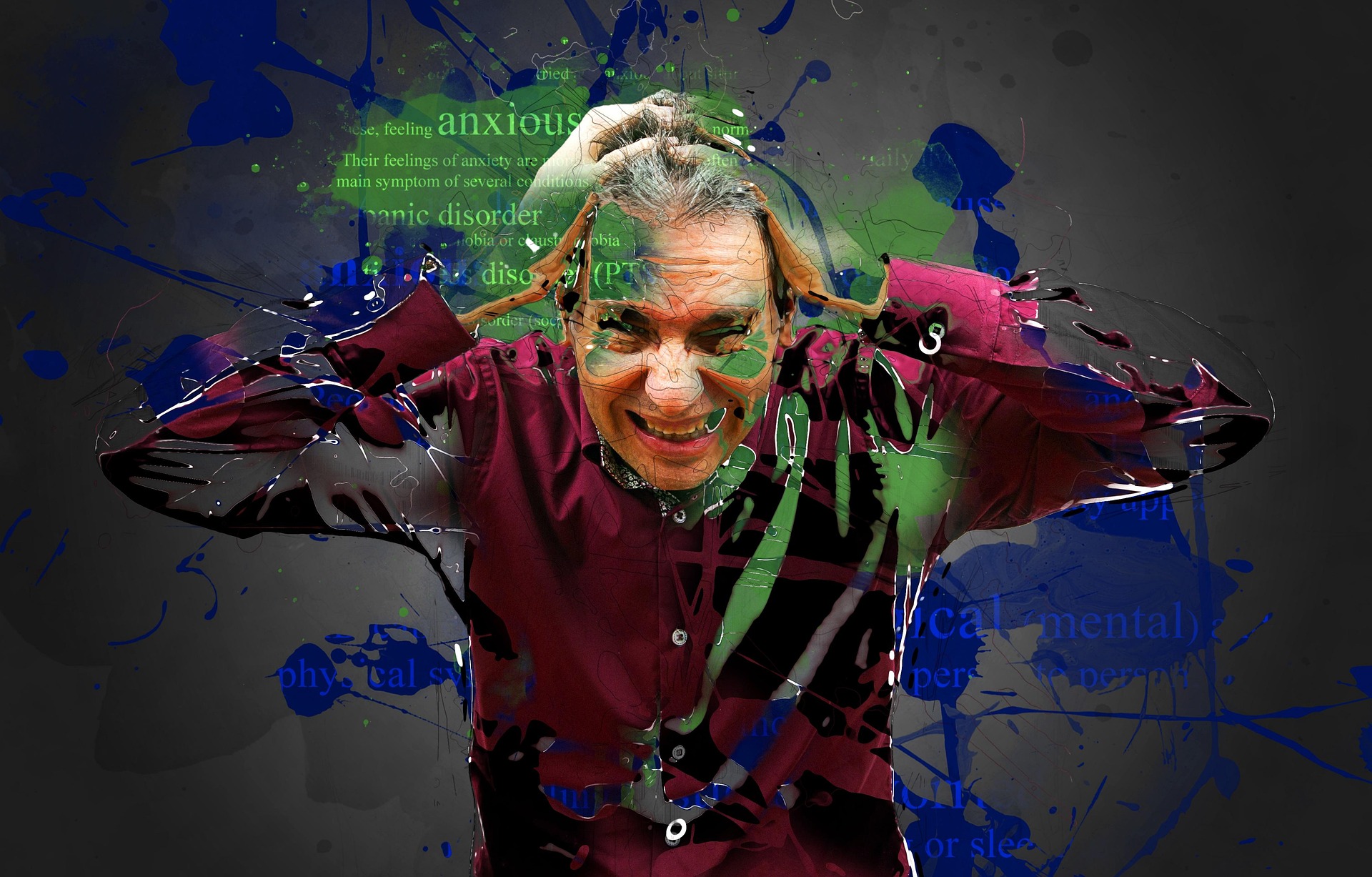
For months, I was convinced a serious illness was hiding inside my body that no doctor could find. The truth was — there was no illness. The fear itself was the problem.
I still remember the exact day it started. I was sitting at my desk, completely fine — or so I thought. Then, for about two seconds, I felt a faint dizziness. Just a flicker. Nothing dramatic. No falling, no blackout. But those two seconds cost me months of my life.
Because right after that, I did what most of us do: I Googled it.
This is my story — of health anxiety, the spiral it pulled me into, and what that journey actually looked like from the inside.
It Started With a Two-Second Dizzy Spell
The day it happened, I had eaten well, slept okay, and done nothing unusual. But that brief moment of dizziness lodged itself into my brain like a splinter. I couldn’t stop thinking about it.
So I searched: “why do I feel dizzy.” Google, in its infinite helpfulness, suggested a range of causes — from “you’re probably just dehydrated” all the way to brain tumor. My eyes went straight to the worst one. They always did.
That Period of My Life
Within the next week, I started feeling chest tightness. I convinced myself a heart attack was coming. I got an ECG, an Echo, a TMT — the works. Every single result came back normal. The doctor looked at me and said, “You’re completely fine.”
But I didn’t believe him. My brain had already decided that something was wrong — something the machines just couldn’t catch yet. That thought, that one stubborn thought, became the foundation of my health anxiety.
Google Became My Doctor — And My Worst Habit
I became what I can only describe as a permanent patient of Google. Every morning, before I even got out of bed, I’d run a mental scan of my body — and whatever I found, I’d search. Mild headache? Searched. Slightly tired? Searched. Stomach gurgling after a meal? Searched.
And Google always, without fail, delivered the worst possible explanation. I’d scroll past “you might just be tired” and land on “could be a sign of something serious.” That was the line I kept finding. That was the line I kept reading.
I wasn’t really sick. I was just a full-time patient of Google — diagnosing myself every morning, writing my own reports, and those reports were always critical.
I remember once going to a doctor and telling him I was pretty sure I had a third-stage illness. He looked at me for a moment and said, “Did you get the medical degree, or did I?” I laughed. But honestly, that’s exactly what I was doing — playing doctor with myself, and I was the worst doctor imaginable.
My Mornings Belonged to Fear
During that phase, my mornings had a pattern. Wake up. Check my pulse. Look at my tongue in the mirror. Pull out the blood pressure machine.
Yes — there was a BP machine on my bedside table. It had basically become a member of the household.
Something I noticed
Every time I checked my pulse obsessively, my heart would start beating faster. And then I’d think — “See! Something IS wrong.” But what I didn’t realize then was that my own anxiety was making it beat faster. I was creating the very symptom I feared. It was a loop I kept feeding.
I also started avoiding things that felt “risky.” I stopped walking for exercise — what if something happened mid-walk? I avoided crowded places. I turned down plans. My world got smaller and smaller, and I didn’t even realize it was happening.
The Moment Something Clicked
One evening, a close friend asked me something I wasn’t prepared for. He said, “You’ve been to multiple doctors. Every report is normal. They all say you’re fine. So what exactly are you afraid of?”
I sat with that for a while. And the honest answer surprised me — I wasn’t afraid of being sick. I was afraid of losing control. I wanted a guarantee that tomorrow would be okay. That nothing unexpected would happen. And no one could give me that guarantee.
That night, for the first time, I saw it clearly: my problem wasn’t in my body. It was in how my mind was interpreting everything happening in my body. I was living in the future — terrified of things that hadn’t happened, and might never happen. I was treating possibility as certainty.
Not every sensation means something is wrong. The body changes constantly — that’s just what bodies do. I had been treating normal as dangerous for months.
An Empty Life Makes Space for Fear
Looking back, I can see something else clearly now. During that period, I didn’t have a strong sense of direction. No big goal I was working toward, no project I was deeply invested in. There was a lot of empty time. And when time is empty, anxiety fills it.
The more I engaged with things — learning something, spending time with people, even just going outside — the less room there was for the fear to grow. It didn’t disappear overnight. But the focus shifted.
What Shifted for Me
I started reading more. Osho’s book “Jeevan Ki Khoj” gave me a completely different way of looking at things — at impermanence, at fear, at the need for control. I began taking morning walks again, even when it felt uncomfortable at first.
When a panic attack came, instead of spiraling, I started reminding myself: this is a wave. It peaks, and then it passes. Every single time. Just knowing that — really knowing it — made those moments less terrifying.
The biggest shift was stopping the symptom searches. I went seven days without Googling anything health-related. It was genuinely hard. But those seven days were the quietest my mind had been in months.
Panic Attacks — The Part That Scared Me Most
Alongside the constant health worry, I’d sometimes get panic attacks. Heart suddenly racing, hands cold, a crushing certainty that something was about to go very wrong. In those moments, everything in me wanted to react — call someone, go to a hospital, do something.
What I slowly learned was that the reaction itself was making it worse. Panic attacks always peak, and then they always pass. Always. That knowledge — really internalizing it — changed how I experienced them. Not immediately. But gradually.
What I personally noticed
When I stopped fighting the sensations and just let them be there — “okay, this is happening, let’s see” — they didn’t last as long. Resistance seemed to stretch them out. Acceptance seemed to shorten them. That felt counterintuitive, but it was real for me.
Where I Am Now
I won’t pretend it all resolved neatly. Anxiety isn’t something that vanishes one day and never comes back. But I’m genuinely in a different place than I was.
The BP machine isn’t on my bedside table anymore. I don’t reach for Google the moment I feel something unfamiliar. I walk, I go out, I’m in crowds without that constant low-level dread.
And the biggest shift was accepting something I kept running from: there is no such thing as a guaranteed tomorrow. No one has that. People live full lives without that guarantee, every single day. The fear of uncertainty isn’t a signal that something is wrong — it’s just fear. And fear doesn’t always tell the truth.
I wasn’t afraid of dying. I was afraid of losing control. The day I understood that difference — that’s when things began to change.
If you’re somewhere in the middle of what I went through — I just want to say you’re not alone in it. I was there too. And it looked exactly like what you’re describing to yourself right now.
You’re stronger than the fear makes you feel. The person who wakes up every day and lives through this kind of anxiety, and keeps going anyway — that’s not someone who is weak. That’s someone who is fighting harder than most people ever have to.
Important: This is entirely my personal experience and nothing more. If you’re dealing with any mental or physical health challenges, please reach out to a qualified doctor or mental health professional — they’re the right people to guide you.