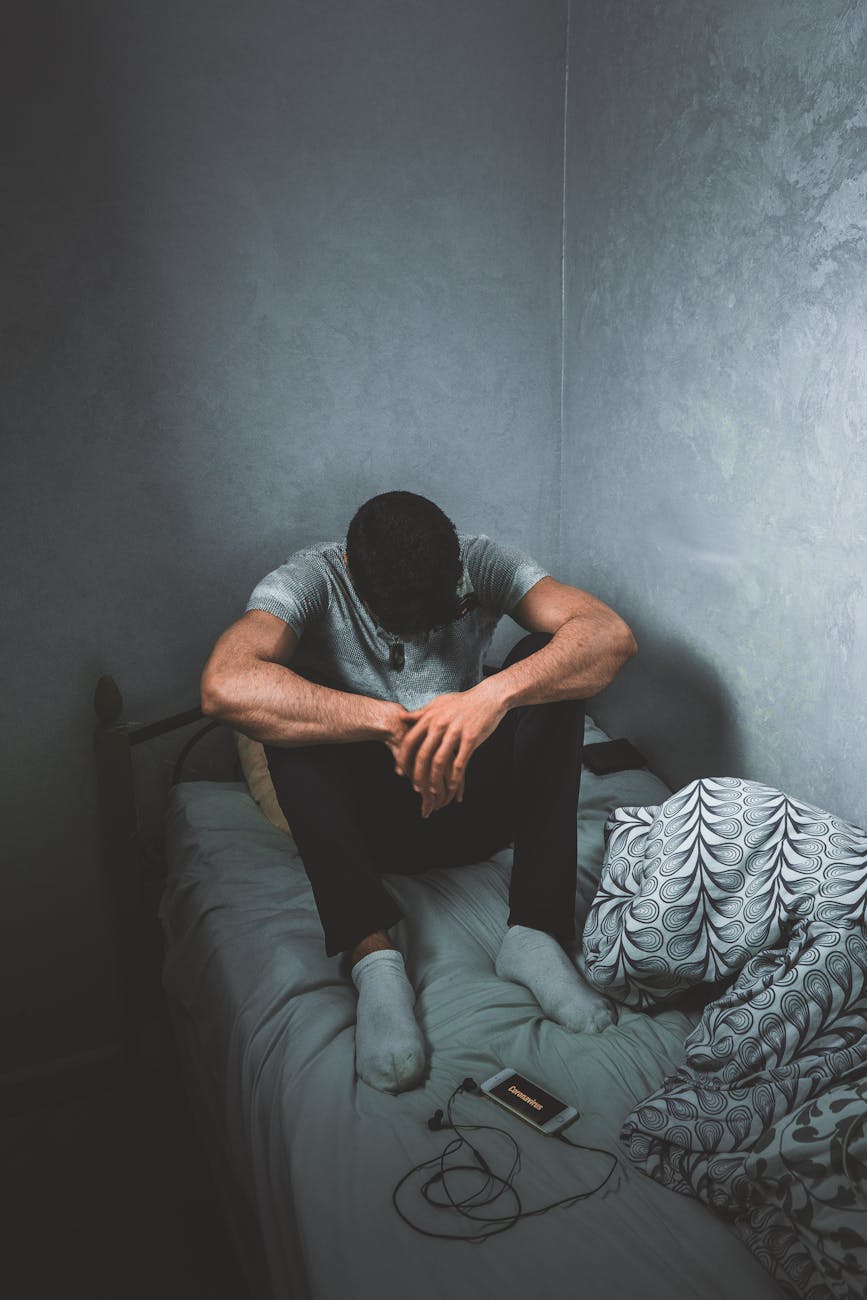
When anxiety first hit me, I didn’t understand what was going on. It started small — just a little unease, a bit of nervousness. But slowly, it grew into something I didn’t recognize. My heart would race for no clear reason. Sleep became difficult, and even when I managed to fall asleep, I’d wake up in the middle of the night with my mind already running. Thoughts just wouldn’t stop.
And the hardest part? I kept asking myself — why is this only happening to me?
That was a strange and exhausting period of my life. But looking back now, I can see things I couldn’t see then — things I rarely hear people talk about openly.
The More I Watched, The Worse It Seemed
After anxiety started, I noticed I had developed a habit of constantly checking in on my body. Checking my pulse. Feeling my heartbeat. Keeping my attention on my chest. It became an automatic thing — almost like a background process running all the time.
There’s a name for this — hyperawareness. And this, I later realized, was a big reason why my symptoms felt like they were getting worse every day.
Here’s a simple way to understand it: if I asked you right now to pay close attention to your breathing, within seconds you’d probably feel like your breath is getting heavier. But your breathing hasn’t actually changed. Only your attention has shifted. Anxiety works exactly the same way. The more I focused on my symptoms, the more intense they felt. The symptoms weren’t necessarily growing — my attention to them was.
This took me a long time to figure out. By the time I did, I had already been going around in circles for a while.
The Loop I Was Stuck In
Anxiety has a cycle to it. A little nervousness triggers fear. Fear makes the heart beat faster. The fast heartbeat triggers more fear. And the loop keeps running.
The more I was scared of my symptoms, the more my body stayed in fight-or-flight mode. Without realizing it, I was feeding my own anxiety.
There was something else too — what I now know is called anticipatory anxiety. Every morning, my first thought would be something like, “I hope I don’t get anxious today.” But just having that thought would prime my brain. The fear would kick in before anything had even happened. And slowly, this became my daily pattern.
I also started avoiding places where I’d had bad moments before. I told myself it was safer that way. But the effect was the opposite — avoidance made the fear feel more real and more permanent. My brain learned that those places were dangerous, and the anxiety only got stronger.
Everything That Was Building Underneath
I came to understand that anxiety doesn’t just appear out of nowhere. It’s a buildup — stress that has been accumulating for a long time. Relationship tension, financial pressure, self-doubt, unresolved things from the past — all of it was sitting there under the surface, and at some point, it was too much to hold.
My lifestyle was directly connected to how I was feeling. On nights when I slept less, my symptoms felt sharper the next day. Too much caffeine left me restless and on edge. I had stopped exercising, and my body felt like it had nowhere to release all that built-up energy. I wasn’t spending time in sunlight, and my mood was consistently low.
These seemed like small things at the time. But together, they were keeping my nervous system in a constant state of alert — never fully settling down.
Gut health was something I hadn’t even considered back then. There’s a reason the gut is sometimes called the second brain. My digestion was a mess during that period, and I didn’t connect it to anxiety at all. But it was adding its own layer of discomfort and signaling stress to my brain.
Scrolling through social media made things worse too. Seeing highlight reels of other people’s lives — someone bought a house, someone’s career took off — created this quiet, nagging feeling of being left behind. That kind of mental noise kept my nervous system stirred up in ways I didn’t even register consciously.
When Every Test Came Back Normal
There were multiple trips to the doctor during this time. ECGs, blood work — everything came back normal. And instead of feeling relieved, I felt confused. I thought, “But something has to be wrong. I can’t be feeling this way for no reason.”
For a while, I almost didn’t trust the results.
But gradually, I started to accept what the tests were actually saying — that there was no dangerous physical condition causing my symptoms. What I was experiencing was real, but it was being driven by stress and anxiety, not by something structurally wrong with my body.
That acceptance didn’t come easily. But it was the turning point.
The Fluctuation That Scared Me Most
One of the most disorienting parts of that period was how unpredictable the symptoms were. Some days I’d feel almost completely fine — like maybe it was all over. Then the next day, everything would come rushing back. That unpredictability scared me more than anything else.
I started believing I would never get better.
What I understand now is that this fluctuation is just part of how anxiety behaves. It doesn’t mean recovery isn’t happening. It just means you’re still inside the cycle. And every cycle, no matter how tight it feels, has a way out.
What Shifted Things for Me
I’m not sharing this as a blueprint for anyone else — just what I noticed working in my own experience.
The biggest shift came when I stopped trying to control the anxiety. Every time I thought “I won’t let a panic attack happen today,” I was adding pressure and frustration on top of anxiety. What actually helped was a kind of acceptance — letting the symptoms be there without fighting them, without immediately reading them as danger. That shift in approach made a surprising difference over time.
Gradually facing the things I had been avoiding also helped. Going back to places I had started steering clear of. Doing small things I’d been putting off because of fear. The first few times were uncomfortable. But over time, the fear started to lose its grip.
The way I talked to myself mattered more than I expected. For a long time, I kept telling myself “I’ll never get better” — almost as a reflex. Those words kept reinforcing the fear. When I started replacing them with something simpler and calmer — just reminding myself that the feeling would pass, that I had gotten through it before — something changed. It wasn’t instant, but it was real.
Short meditation sessions helped quiet the noise in my head. Not anything complicated — just a few minutes of sitting still. It gave my nervous system small, regular breaks that it clearly needed.
And adjusting the basics — sleep, movement, cutting back on caffeine — these weren’t dramatic changes, but they added up. There was no single fix. It was a lot of small adjustments that slowly, over time, made the whole thing feel more manageable.
The One Thing I Want to Leave With You
Anxiety is not a permanent condition. And it’s not a sign of weakness. It’s a signal — something telling you that a part of your life needs attention. Maybe it’s how you’re living, maybe it’s something you’ve been holding in for too long, maybe it’s a pattern of thinking that’s run its course.
The storm on the inside is pointing at something real. You’re not broken. You’re not weak. You’re just someone who has been carrying a lot, and your body is finally asking for a different way forward.
I’m not completely anxiety-free today. I don’t think I need to pretend otherwise.
But I understand my body now in a way I didn’t before — and honestly, that has been the most meaningful change of all.