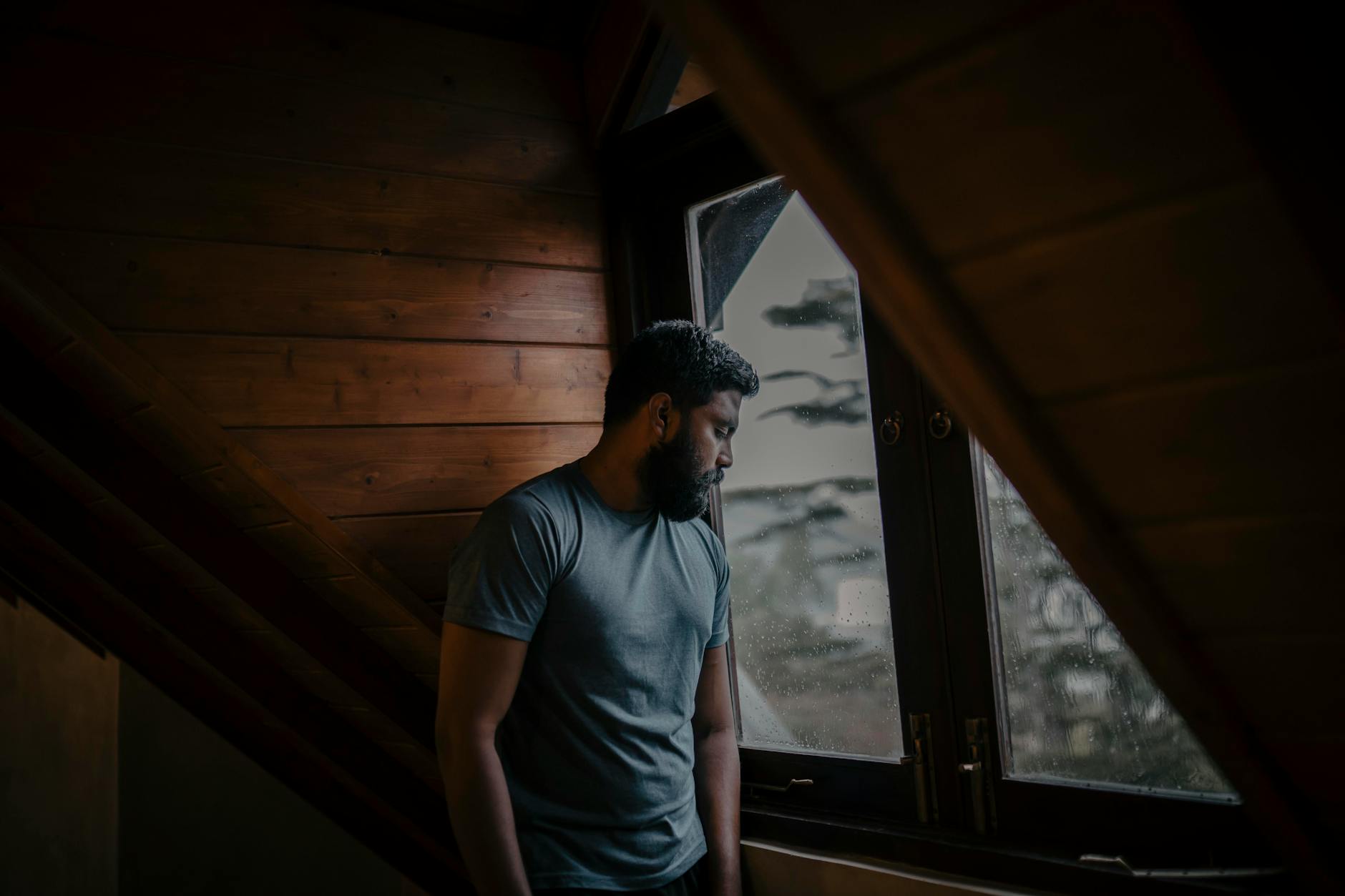
There was a phase in my life that I don’t talk about much. Every morning I would wake up with a strange heaviness in my chest. My heart would race for no reason. Sometimes my hands and feet would go numb. I went to doctors, got every test done — and every single report came back normal. Doctors said I was perfectly fine. But I knew I wasn’t.
People around me would say “it’s all in your head” — and honestly, that used to hurt more than the physical symptoms themselves. Because what I was feeling was completely real. It wasn’t drama. It wasn’t imagination.
That was the phase when I slowly started understanding what anxiety actually is. And today I want to share that journey — not as an expert, not as someone giving advice — but simply as someone who has been through it.
When Your Body Feels Sick But Every Report Says Normal
The most confusing and frustrating part of my experience was this — I could feel something was wrong, but no test could prove it. I would search my symptoms on Google late at night, and every search would throw up something scarier than before. One day I was convinced it was a heart problem. Another day it felt like something neurological. I was stuck in a loop of fear that kept feeding itself.
What I eventually understood — much later — was that the body and mind are not separate systems. They are deeply connected. When I was overthinking something for days and weeks, the impact would slowly show up in my entire body.
My muscles would stay tense around the clock without any physical reason. I would feel exhausted without doing anything significant. There was a constant low-level unease that I couldn’t explain to anyone.
And here is the part that took me longest to accept — everything I was feeling was real. The racing heart, the shortness of breath, the stomach cramps, the dizziness — none of it was fake. But the source wasn’t a damaged organ. It was an overloaded nervous system sending the wrong signals.
The “Great Pretender” — What I Wish Someone Had Told Me Earlier
I came across a term once that completely changed how I saw my situation. In medical literature, anxiety is sometimes called “The Great Pretender” — because it can imitate so many physical illnesses so convincingly that even the person going through it is completely fooled.
There were moments when I genuinely believed something terrible was about to happen to me in the next few minutes. My heart would pound, breathing would feel difficult, and my entire body would go on high alert. Looking back now, I understand what was happening — my brain had detected something as a threat and was preparing my body to fight or flee. The physical response was absolutely real. But there was no actual threat.
What I didn’t know then was that when the mind stays in a worried state for a long time, it slowly becomes what I can only describe as “overprotective.” It starts treating even harmless body sensations as danger signals. And that is when the cycle really takes hold — feel something in your body, get scared, feel more symptoms because you’re scared, get more scared.
My muscles were tense for months. That is why I felt tired without reason. That exhaustion wasn’t weakness — it was a nervous system running on empty.
Did I Do Something Wrong to End Up Here?
For a long time, I blamed myself. I thought maybe I had made poor choices, hadn’t managed stress well enough, or was simply not strong enough mentally. That guilt sat alongside the anxiety and made everything heavier.
But with time, I understood something important — anxiety doesn’t arrive suddenly out of nowhere. It builds slowly. Prolonged stress, emotionally difficult periods, fear that stays too long without release — these things gradually push the nervous system into a state of constant alertness. It wasn’t a personal failure. It was something that had accumulated over time.
The shift that helped me most was surprisingly simple — I stopped being at war with my own body. Before, every time I felt something uncomfortable, my immediate reaction was panic. “What is happening to me? Something bad is coming.” Slowly, I started practicing a different response. “Okay. Let this be. I am safe. This will pass.”
It sounds almost too simple. But changing that one internal response — over and over, consistently — made a real difference for me personally.
Small Things That Quietly Changed Everything
I didn’t overhaul my entire life overnight. That’s not how it worked for me. It was small, unglamorous changes that slowly added up.
Walking helped me more than I expected. Not intense exercise — just moving. When the restlessness peaked, stepping outside and walking for even ten minutes would take the edge off. I also noticed that skipping meals made everything worse.
When my blood sugar dropped, the unease would spike. So I started being more regular with eating — not perfectly, but more consciously than before.
I stopped Googling my symptoms. This was probably the single most important thing I did. Every search session would end with me more terrified than before. It was a loop I had to break, and breaking it was uncomfortable at first, but necessary.
I started sitting in sunlight for a bit each day — not because someone told me to, but because I genuinely felt calmer after it. Small things. None of them dramatic. But together they started shifting something.
And I won’t pretend it was linear. There were good weeks followed by hard days. There were moments where I thought I was finally out of it, and then a rough patch would come back. Progress wasn’t a straight line for me — it never is.
The Fear That It Would Last Forever
The scariest thought during that whole period wasn’t the symptoms themselves. It was the fear that this would be my life permanently. That I would always feel this way. That there was no way out.
I want to be honest here — I genuinely did not know if things would get better. I hoped they would, but hope felt thin sometimes.
What I know now, from my own experience, is that it did get better. Slowly, unevenly, but genuinely better. The days when everything felt impossible became fewer. The moments of calm became longer. The body that felt like an enemy started feeling familiar again.
Anxiety is not a life sentence. That is something I had to learn through living it, not through being told.
For Anyone Who Is Going Through This Right Now
If you are in that place right now — where every report is normal but you feel anything but normal, where people around you don’t quite understand, where the fear of your own body has become exhausting — I just want to say this:
What you are feeling is real. You are not being dramatic. You are not weak. You are not broken.
You are someone whose nervous system has been under a lot of pressure, and it is responding the only way it knows how. That is not a character flaw. That is not a permanent condition. That is something that can change.
Be patient with yourself in a way you probably haven’t been. Treat yourself with the same gentleness you would offer a close friend going through the same thing. Celebrate the small wins — getting through a difficult morning, choosing not to Google symptoms, taking a short walk when everything in you wanted to stay curled up.
Those small acts of courage matter more than they look.
You Are Stronger Than This Feels Right Now
I remember those mornings clearly — waking up already tired, already dreading the day, already carrying a weight I couldn’t name. I remember how isolating it felt to be surrounded by people who seemed completely fine while I was quietly falling apart inside.
But that season passed. Not because I was exceptionally strong or did everything right — but because I kept going. One day at a time. Sometimes one hour at a time.
If that phase could pass for someone like me, who was utterly convinced at some points that it never would — it can pass for you too.
You are not alone in this. You are not imagining things. And you are far more capable of getting through this than you currently believe.
Keep going. One small step at a time. That is enough. That has always been enough.