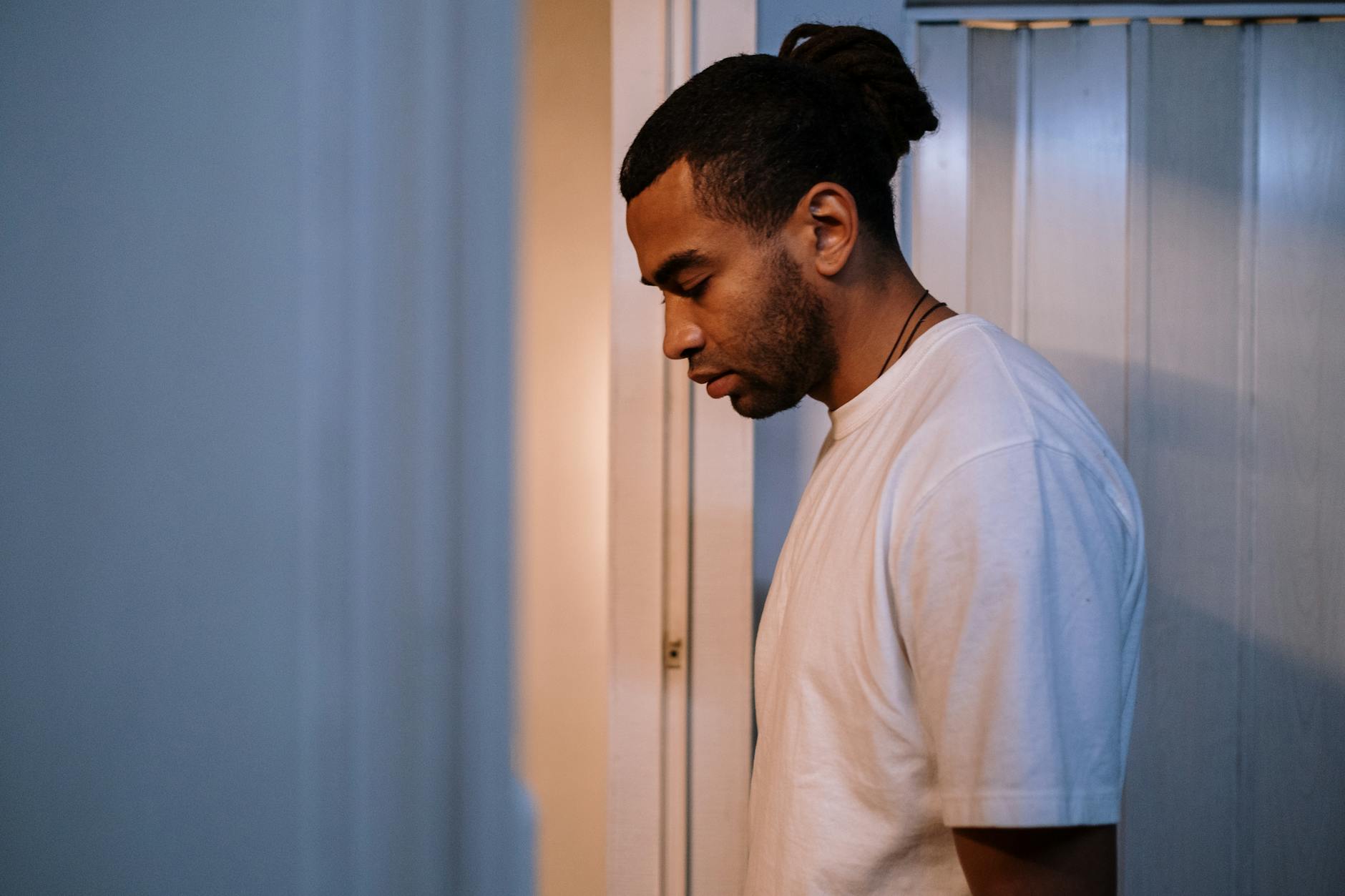
There was a time, not too long ago, when something felt deeply off. My chest felt heavy for no reason. My heart would suddenly start racing. My hands and feet would tremble at the most random moments. I thought maybe something was physically wrong with me. I got tests done. Reports came back normal. And yet — the sensations were still there. Real. Present. Undeniable.
That was the first time I truly understood what anxiety actually looks like from the inside.
When the Mind Goes Quiet, the Body Speaks
My anxiety wasn’t just “overthinking.” It wasn’t me being dramatic or weak. It was a full-body experience that I had no language for at the time.
My stomach would act up without any reason — bloating, restlessness, sometimes worse. My shoulders and neck stayed stiff, like I was carrying an invisible weight that never went away. Even when I slept, I woke up exhausted.
Everything was connected. And I only understood that when I finally stopped running and started paying attention to what was happening inside me.
The mind and the body are not separate. When the mind senses danger — even imaginary danger — the body automatically shifts into survival mode. The heartbeat speeds up. Breathing gets heavier. Muscles tighten. And then the brain says, “Something is wrong.”
That loop. That exhausting, relentless loop. I lived inside it for longer than I’d like to admit.
Google Made Everything Worse
My biggest mistake during that time was Googling my symptoms. “Why is there pain in my chest?” “Why does my left arm feel numb?” “Is shortness of breath dangerous?”
Every search made the fear bigger. Every article added a new thing to worry about. I’d close the tab more anxious than when I opened it.
One day, I just stopped. Cold turkey. No more searching symptoms. And honestly — that was the first real step toward feeling better.
The problem was never the symptoms themselves. The problem was how I was interpreting them. After a long period of anxiety, the nervous system becomes hyper-alert. It starts treating even the smallest physical sensation as a potential threat. A tiny flutter in the chest becomes a heart attack in your head. A slight dizziness becomes something catastrophic.
That’s why the reports come back normal — but the pain still feels very real. This isn’t a contradiction. It’s just how a stressed-out nervous system works.
The Night I Stopped Fighting It
One night, I was particularly restless. Chest heavy. Hands slightly shaky. My first instinct was to panic. But instead — I just lay down. Took a slow breath. And stayed with the feeling.
Something shifted. My heart rate didn’t slow down immediately. But I stopped treating it like an enemy. I just watched it. Observed it. It was fast, yes — but it wasn’t there to hurt me. It was just… doing its job.
For the first time, I thought — this body is not against me. It’s protecting me. It’s sending a signal that I’ve been carrying too much for too long.
That realization changed something fundamental in how I experienced anxiety from that point on.
The Parts of the Body Anxiety Hits Hardest
Looking back, I can clearly see where anxiety showed up in my body — and it was everywhere.
The gut took the biggest hit. Unexplained bloating, nausea, irregular digestion — all without any physical cause. There’s actually a deep connection between the brain and the gut that science calls the “gut-brain axis.” My body was proving it daily.
Muscles were constantly tight — especially around the shoulders, neck, and jaw. My body felt like it was bracing for a collision that never came.
Even my skin reacted sometimes. Small rashes, itching, random sensitivity. Stress doesn’t just live in your head. It leaks everywhere.
None of this was illness. It was my body’s way of processing what my mind couldn’t express out loud.
Something an Old Text Taught Me
I remember reading a line from the Bhagavad Gita during that period: “You have the right to your actions, but never to the fruits of those actions.”
At first, it felt like just a philosophical statement. But sitting with anxiety, it started to mean something very personal.
Most of anxiety lives in the future — in outcomes that haven’t happened yet. We fear the result before it arrives. We catastrophize events that exist only in our imagination.
When I started pulling my attention back to just this moment — this breath, this second — the grip of anxiety loosened. Not completely. Not immediately. But noticeably.
The future stopped feeling like a wall closing in. It started feeling like something that simply hadn’t arrived yet.
The Weird Night I Said Thank You to My Body
One night — in what I can only describe as a slightly desperate, slightly sincere moment — I lay in bed and just… thanked my body.
My heart, for not stopping. My lungs, for breathing without being asked. My feet, for carrying me through the day.
It sounds strange. It felt strange when I did it. But something about shifting from resentment to gratitude — even for a minute — changed the internal weather completely.
I slept properly that night for the first time in a while.
Anxiety Is a Storm, Not the Sky
The most important thing I came to understand — slowly, imperfectly — is that anxiety is not permanent.
It didn’t arrive overnight. It built up over time, layer by layer. And it left the same way — not all at once, but gradually, with some days better than others.
The nervous system can be retrained. The body can return to a calmer baseline. It’s a slow process. It’s not linear. But it’s real.
Healing began, for me, when I stopped trying to fight anxiety and started simply observing it. When I stopped Googling.
When I let the sensations be present without deciding they meant something catastrophic. When I started saying — quietly, to myself — “I am safe.”
Some Days It Still Shows Up
I’ll be honest — even now, sometimes that familiar feeling returns. A slightly elevated heartbeat. A heaviness in the chest. A restlessness I can’t name.
But now I know what it is. Now it doesn’t frighten me the way it used to.
Because now I understand — this is my body talking to me. Not threatening me. Not breaking down. Just communicating, in the only language it has, that I need to slow down. Rest. Breathe. Come back to the present.
That shift in perspective was everything.
If you’re somewhere in the middle of this — where every test is normal but the pain is very real — I just want you to know: you’re not imagining it. You’re not weak. You’re not broken.
You’re carrying something heavy. And the fact that you’re still here, still searching for understanding, still trying — that matters more than you know.
This doesn’t last forever. The storm passes. And on the other side of it, you’ll know yourself in a way you never did before.
Take care of yourself.