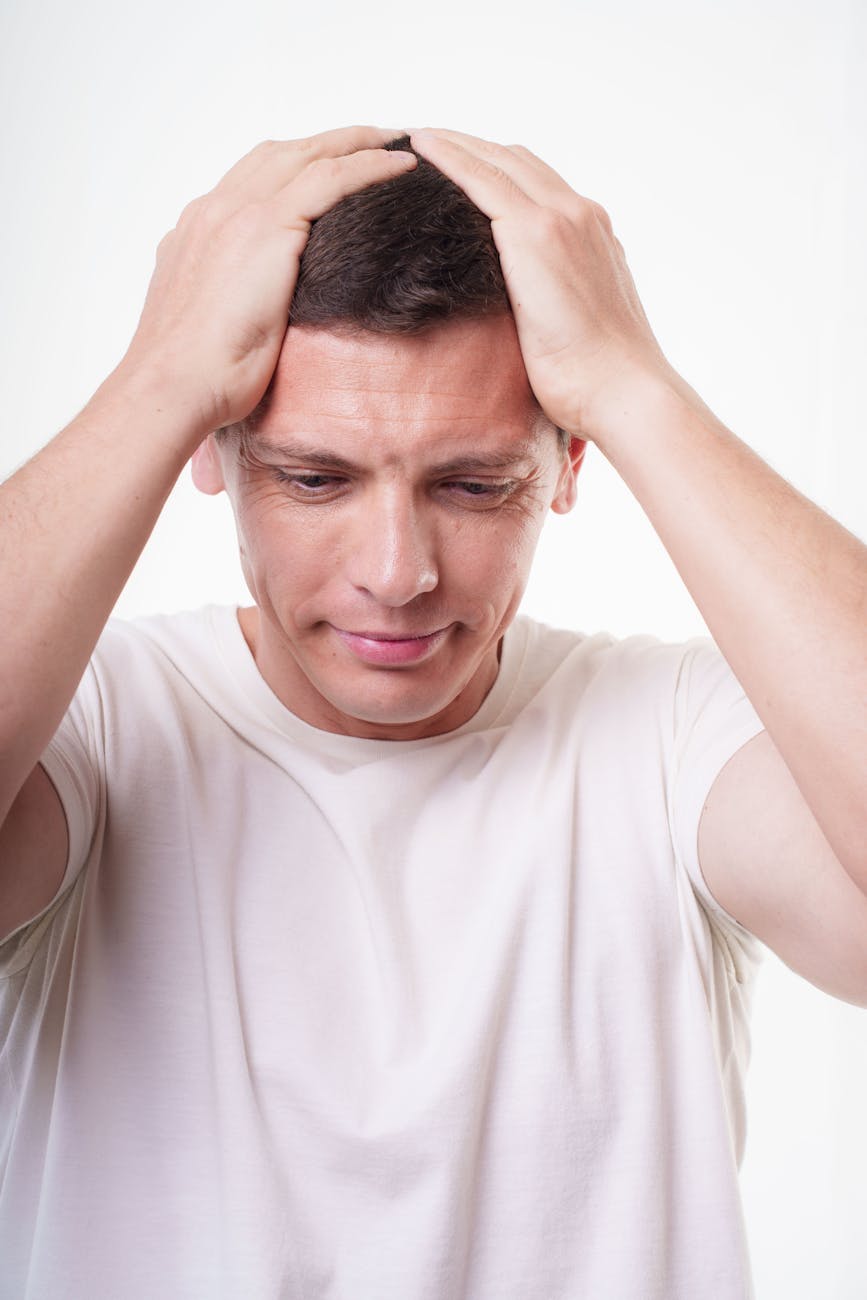
There was a time when the first thing I did every single morning — before checking my phone, before brushing my teeth, before anything — was press my fingers against my neck and count my heartbeats. If it felt even slightly off, my entire day was ruined before it even started. This was my reality for a long time, and I never really talked about it openly. I’m writing this today because I think some people might read it and feel a little less alone.
How It All Started
I remember the exact day it began. I was completely fine — no physical illness, no injury, nothing. Then one afternoon I felt a slight dizziness. Just a moment. Barely even noticeable.
But my brain made it into something much bigger. Five minutes later, I was on Google.
That was the mistake.
Google told me dizziness could be caused by dehydration — and also by a range of serious conditions. And as always, my eyes skipped straight past the simple explanations and landed on the scary ones. Within days, I started feeling heaviness in my chest. Then my heart felt like it was racing. Then my head felt heavy all the time.
I got an ECG done. An echo. A stress test. Every single report came back completely normal.
But my mind refused to accept it.
A thought had settled in — “the machines just aren’t catching it yet.” And that one thought became the foundation of everything that followed.
I Became My Own Doctor
At some point, I had developed a full morning routine — and it had nothing to do with productivity or wellness. Wake up, scan my body for sensations, check my pulse, open Google, search something.
If my breathing felt slightly faster — “heart problem symptoms. If my head ached — “early signs of brain tumor.”
If I felt tired — “cancer fatigue.”
Google always gave results. Sometimes reassuring, sometimes terrifying. But somehow my eyes always found the terrifying part first.
I remember a doctor once telling me — with a small smile — that by the time I came in, I had already diagnosed myself with something that took years of medical school to understand. We both laughed. But inside I knew the laugh was hollow.
At home, I had a blood pressure monitor that I used more than my TV remote.
Anxious? Check it. Slightly calmer? Check it again to confirm. Bored and alone? Definitely check it. But that checking never gave me peace — it only gave me more data to worry about.
The Symptoms Felt Completely Real — That Was the Hardest Part
This is something I want to be honest about, because I think it’s the part people misunderstand the most.
The symptoms were not in my imagination. They felt completely, genuinely real. The chest tightness was real. The racing heart was real. The tingling in my hands and feet was real.
So when people would say “nothing is wrong, relax” — I’d feel frustrated and misunderstood. Because something was happening. It just wasn’t what I thought it was.
What I didn’t understand back then was that anxiety itself creates physical sensations. When the brain stays in a constant state of alarm, the body responds accordingly — muscles tighten, breathing becomes shallow, the heart beats faster. It’s not fake. It’s just not a disease.
And the more I checked my pulse, the faster it seemed to beat. Because focused attention on a sensation amplifies it. I was stuck in a loop — checking, sensing, panicking, checking again — and I didn’t even realize I was the one keeping the loop going.
I Wasn’t Alone in This
One evening I came across something that mentioned how common this kind of health-focused anxiety is. That a lot of people spend significant parts of their day monitoring their bodies, interpreting normal sensations as signs of something serious, and living in quiet dread of a diagnosis that never actually comes.
Reading that was the first time I felt something loosen in my chest.
I wasn’t broken. I wasn’t uniquely weak or strange. I was someone whose brain had become overprotective — and that overprotection had become its own kind of problem.
My World Had Quietly Become Very Small
By the time I really noticed what was happening, my life had shrunk significantly.
I avoided going out alone. Crowded places made me anxious — what if something happens and I’m surrounded by strangers? I avoided heavy exercise — what if it puts too much strain on my heart? I was careful about everything I ate in the name of “health” — but could still eat street food without thinking and then spend an hour treating stomach discomfort as a serious symptom.
The irony was sharp. I was doing everything in the name of health while my actual health — mental and physical both — was quietly getting worse.
Empty time was the most dangerous. When there was nothing occupying my mind, it immediately started scanning. Any sensation, any shift in how I felt — and the whole machinery would start up again. A slight headache became a potential tumor. A skipped heartbeat became a cardiac event. A yawn became a sign of low oxygen.
I was living in the future — in a future full of worst-case scenarios that hadn’t happened and probably never would.
What Changed for Me
I want to be careful here, because this is just my own experience. Everyone’s path looks different and I’m not suggesting mine is the right one.
But a few things genuinely shifted things for me. The first was reducing the symptom-searching. This sounds simple but it wasn’t. The urge was strong — every sensation felt urgent. But I started noticing a clear pattern: every time I searched, I felt worse afterward, not better.
That was a signal. The searching wasn’t protecting me. It was feeding the anxiety.
The second was movement. I had been avoiding physical activity out of fear.
Slowly, I started walking — just short distances at first. And something interesting happened. My body showed me it was capable. That quiet confidence started to grow, very gradually.
The third was learning to question the thoughts. When the thought came — “something serious is happening” — I started sitting with it instead of immediately reacting. My reports are normal. I felt fine this morning. This is anxiety, not an emergency. It felt mechanical at first. But over time, it became more natural.
And then there was reading. I picked up Osho’s books — particularly one called Jeevan Ki Khoj — and something about the perspective in those pages helped me breathe a little easier. The idea that life isn’t something to be controlled and guaranteed, but something to be lived. That landed differently for me than any medical reassurance ever did.
The Bigger Thing I Understood
Health anxiety taught me something I didn’t expect to learn from it. The fear was never really about what was happening. It was about what could happen. The mind would travel into the future, find every possible danger, and then bring that danger back into the present as if it were already real.
And here’s the thing — that future never arrived. The catastrophes I spent so much energy dreading never materialized. But their fear lived in me fully, every single day.
We all want certainty. We want to know that we’re safe, that tomorrow is guaranteed, that nothing will go wrong. But that guarantee doesn’t exist — for anyone. And somehow, despite that, people wake up and laugh and eat and travel and build things. Life continues without the guarantee. I’m slowly learning to do the same.
If Any of This Sounds Familiar
I didn’t write this to tell anyone what they should or shouldn’t do. I wrote it because I know that when I was going through this, what I needed more than advice was just someone saying — yes, this happens, it feels real, and you’re not alone in it.
If you see yourself in this post — if the pulse-checking and the Googling and the quiet constant dread feel familiar — just know that your body being physically fine is actually meaningful. Your reports being normal matters. Your mind is exhausted from carrying something heavy for too long.
And exhausted minds can recover.
It takes time. But it happens.
This is entirely my personal experience. I’m not a medical professional and this is not advice of any kind.